

 By
·
5 minute read
By
·
5 minute read
Financial technology platforms, digital payment gateways, peer-to-peer lending applications, and cloud-first trading systems process sensitive financial transactions every day. As fintech companies scale and integrate with open-banking APIs, they become valuable targets for credential theft, payment diversion, business email compromise, and cloud infrastructure exploitation.
Agentic MDR for FinTech combines autonomous, AI-driven threat investigation with experienced human security oversight. It helps financial technology firms monitor complex multi-cloud ecosystems, investigate suspicious activity across connected systems, contain routine threats, and escalate high-risk operational decisions to security analysts.
How Agentic MDR Operates Across FinTech Infrastructure
Agentic Managed Detection and Response (AMDR) uses specialized AI agents to support threat monitoring, investigation, containment, and reporting across financial infrastructure. Instead of requiring security analysts to manually review thousands of alerts, AI agents collect evidence, connect related events across cloud and SaaS tools, and execute approved response playbooks at machine speed.
Common capabilities of AMDR Services for the fintech industry include:
- Ecosystem monitoring: Maintain continuous visibility across identities, endpoints, API gateways, multi-cloud workloads, and transaction services.
- Cross-tool investigations: Correlate alerts across identity providers, email platforms, SaaS environments, cloud workloads, and payment-processing tools.
- Account compromise detection: Identify suspicious logins, unexpected privilege escalation, and unusual API activity that may indicate account takeover.
- Automated threat containment: Contain routine threats, such as compromised mailboxes or malicious inbox rules, through pre-approved workflows.
- Expert escalation: Escalate operationally sensitive decisions to human analysts to protect transaction pipelines and financial operations.
This model provides continuous 24/7/365 security coverage without requiring growing fintech firms to build, staff, and maintain a fully internal Security Operations Center.
Primary Threat Vectors in FinTech Ecosystems
Fintech platforms operate across cloud environments, payment processors, customer-facing applications, APIs, and internal SaaS tools. The interconnected nature of these environments creates attack paths through which malicious activity can spread if it is not identified quickly.
Identity, Remote Access, and API Gateways
Employees, customer support representatives, external developers, and third-party vendors may require access to production databases, cloud platforms, and administrative systems. Stolen credentials or exposed API keys can allow attackers to enter financial networks, escalate privileges, or access sensitive customer information.
Agentic MDR for FinTech evaluates authentication logs, user behavior, privilege updates, device information, and API activity to identify potential account compromise before an attacker moves deeper into payment systems.
Phishing and Payment Diversion
Phishing attacks targeting finance teams, executives, and privileged users can lead to business email compromise. Attackers may create malicious inbox rules, establish unauthorized email forwarding, impersonate trusted contacts, or attempt to redirect vendor payments.
AMDR Services can analyze suspicious email activity, identify malicious inbox rules, contain compromised accounts, and support investigation alongside internal payment-verification procedures.
Key Security Operations Standards for Digital Financial Services
An effective Agentic MDR strategy should strengthen threat detection while respecting regulatory requirements, customer expectations, and high-volume transaction workflows.
- Unify security telemetry: Ingest and correlate data across identity, email, endpoint, cloud workload, and API management platforms.
- Automate case investigation: Trace potential attack paths and assemble supporting evidence as alerts arrive.
- Prioritize financial and operational risk: Evaluate threats based on potential data exposure, regulatory consequences, and service disruption.
- Define approved response playbooks: Establish clear containment parameters for routine threats to reduce response delays.
- Maintain human accountability: Keep experienced analysts responsible for decisions that may affect customer-facing services or payment processing.
- Preserve complete audit trails: Maintain detailed investigation records to support SOC 2, PCI DSS, GLBA, and applicable regulatory reviews.
A single unauthorized sign-in may look like a routine user error. When it coincides with a new OAuth application authorization, an inbox rule redirecting invoice emails, and a sudden privilege change in a cloud database, it may indicate a targeted financial intrusion.
The Need for Real-Time Threat Correlation
Preventive security controls such as firewalls, multifactor authentication, and email filters cannot stop every spear-phishing attempt, stolen token, malicious application, or software vulnerability. Fintech organizations also need visibility into what happens after suspicious activity enters their environment.
Continuous investigation powered by Agentic MDR enables AI agents to gather evidence, correlate telemetry, and trace potential attack paths as alerts occur. Routine security cases can be handled through defined response playbooks, while complex or uncertain threats are escalated to human analysts with the relevant context already assembled.
This approach shortens the time between detection and containment while reducing the pressure placed on internal engineering and security teams responsible for protecting customer assets and critical financial services.
Can your team investigate every fintech security alert around the clock? BitLyft Agentic MDR combines autonomous investigation with human-led SOC oversight to provide continuous detection, investigation, and response.
Request a DemoEstablishing Accountable Governance in Financial Security
Agentic MDR Services should be aligned with each fintech company’s technology stack, regulatory responsibilities, and operational requirements. Organizations must establish clear boundaries defining which actions can be automated, which require analyst validation, and which systems need strict human-in-the-loop safeguards.
Detection and response workflows should also account for normal business activity, including high-volume trading periods, batch settlement cycles, developer deployments, scheduled maintenance, and third-party integrations.
When AMDR for FinTech understands this operational context, it can better distinguish legitimate engineering workflows from suspicious behavior. This enables faster response while preserving service availability, financial operations, and customer trust.
Conclusion
Fintech firms need more than isolated security alerts. They need fast, connected investigations across identities, endpoints, cloud services, SaaS applications, APIs, and payment infrastructure.
Agentic MDR for FinTech combines machine-speed AI analysis with experienced human judgment. AI agents manage alert volume and approved routine containment, while security analysts oversee complex incidents and decisions involving significant operational or financial risk.
By implementing AMDR Services, financial technology organizations can strengthen customer account protection, support regulatory readiness, and improve operational resilience across their connected environments.
Protect Financial Innovation Around the Clock
BitLyft AMDR provides a fully managed security operation powered by autonomous investigation and a 100% U.S.-based SOC team. It helps fintech organizations monitor connected environments, investigate suspicious activity, and respond to cyber threats continuously.
- 24/7 monitoring and response
- Autonomous alert investigation
- Human oversight for financially sensitive decisions
- Visibility across identity, endpoint, cloud, SaaS, and API systems
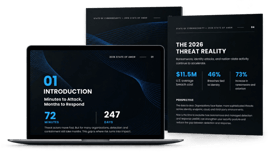
The State of Agentic MDR
See how detection and response is changing now that attacks unfold in minutes, from the 95-day warning before ransomware to what separates real agentic MDR from repackaged tools. This guide defines the AMDR category and gives you the criteria to evaluate any vendor, ours included.
Download the GuideFAQs
What is Agentic MDR for FinTech?
Agentic MDR for FinTech is a managed detection and response service that uses autonomous AI agents to investigate alerts and resolve approved routine security cases, supported by human security analysts who oversee high-risk operational decisions.
How does AMDR differ from traditional MDR services?
Traditional MDR may depend heavily on analysts manually reviewing individual alerts. AMDR uses autonomous agents to collect evidence, correlate activity across cloud and SaaS applications, and execute pre-approved response workflows at machine speed.
What threats can AMDR detect in fintech environments?
AMDR can help detect compromised employee and vendor accounts, business email compromise, malicious inbox rules, unauthorized API activity, cloud misconfigurations, ransomware behavior, and privilege misuse across connected financial systems.
Can AMDR monitor multi-cloud and SaaS environments?
AMDR can correlate available security signals across cloud infrastructure, SaaS applications, identity providers, email platforms, endpoints, and other connected tools. Coverage depends on available integrations and the organization’s technology architecture.
Can fintech companies control automated response actions?
Yes. Response workflows can be configured according to the organization’s risk policies. Routine actions, such as revoking a compromised token or isolating an endpoint, may be automated, while actions affecting live financial applications can require human approval.
Does Agentic MDR replace an internal fintech security team?
No. It extends the capabilities of internal teams by automating high-volume alert investigation, providing 24/7 monitoring, and giving teams access to experienced threat analysts when critical decisions are required.